

This is part of the 0xResearch newsletter. To read the full editions, Subscribe.
It was a mixed week for cryptocurrencies, with Bitcoin finishing higher but with sharp variation across sectors. DePIN and Gaming led a surprise rebound after a difficult year, while L2s, RWAs and treasury trades continued to decline as flows remained volatile.
To add some insight into the new year, we’ve rounded up some weekend reads on stablecoin returns, payments infrastructure, interoperability, and the fastest-moving narratives of the past year.
With the stock trading week shortened due to the holidays, the focus turns to the performance of cryptocurrencies over the past week. BTC ended the week up 1.6%, although performance across altcoins remains very fragmented.
The larger engine may come as a surprise. DePIN and Gaming led all sectors with gains of 13.1% and 12.6%, respectively. These were two of the weakest performers in 2025, falling -79.5% and -81.3% over the year, making the recovery notable.
DePIN’s strength was driven by FIL and RENDER, which rose 22% and 13% during the week and together represent 49% of the index. Gaming followed a similar pattern, with IMX stock up 11%, doing most of the heavy lifting for the sector.
On the downside, L2s and RWAs lagged, falling -2.67% and -0.84% over the week. MNT and ZORA led L2 weakness, down -5.7% and -6.4%. Meanwhile, other Tier 2 names such as OP, ARB and ZK recorded gains of between 10% and 20%, highlighting the sharp divergence within the sector. Asset-weighted assets have come under pressure as gold retreats after its strong run this year, with both PAXG and XAUT down around -3.4%.
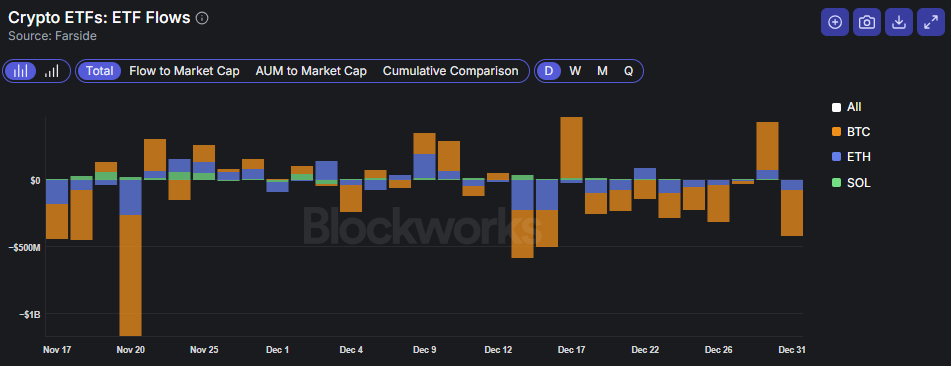
Flows remain intermittent. On December 31, ETFs saw outflows of $417.8 million, roughly equivalent to the $428.2 million inflows recorded the previous day.
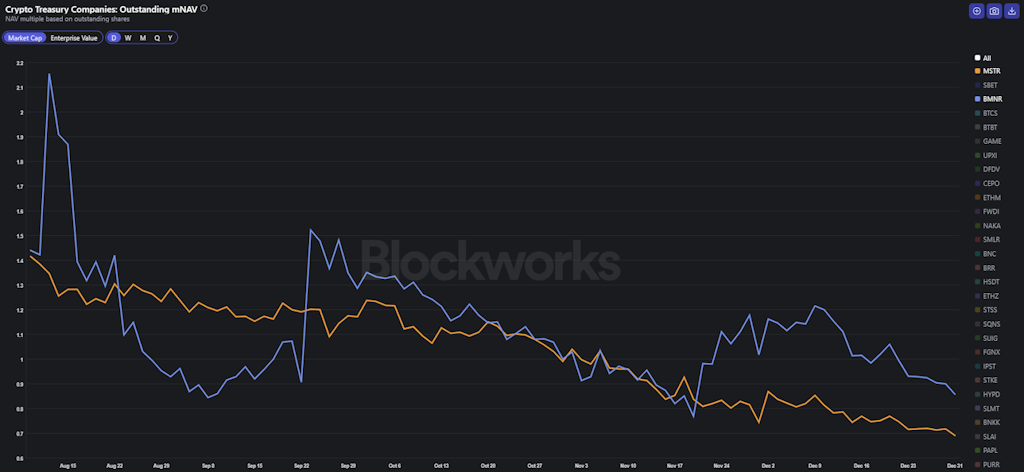
Digital asset treasuries continue to experience pressure, with digital asset value (mNAV) multiples increasing under pressure. MSTR and BMNR are now trading at mNAV levels of 0.69 and 0.85, underscoring the pressure on Treasury trading heading into the new year.
Recommended analyzes at the end of the year
Neutrl: Institutional OTC yield launch for stablecoins
Blockworks research found Neutrl brings institutional-level OTC arbitrage into the shell of a stablecoin, providing market-neutral returns that are less dependent on funding cycles than current synthetic dollars. Early traction and double-digit sNUSD returns indicate strong demand, supported by token unlock pipelines and OTC token access via STIX. Fundamental upside is based on scalable deployment in covered OTC trades, while risk focuses on execution, counterparty performance and liquidity management. If returns continue as TVL grows, Neutrl could mirror Ethena’s early dynamics in a more structurally defensive form.
Crypto card ditches
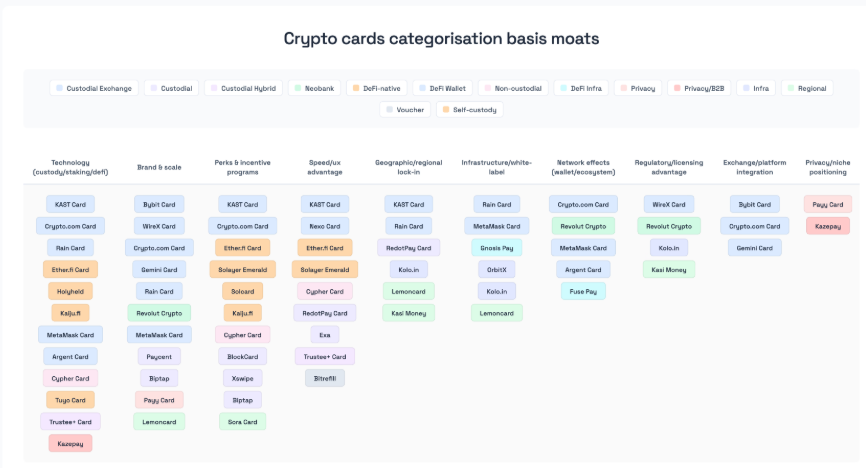
He finds the Polaris box Crypto cards and neobanks have reached a real inflection point as value shifts away from rewards and brands towards infrastructure, compliance and liquidity control. The analysis shows that durable moats come from having primitives like regulated access, programmable liquidity, and deep integration, not cashback. Railroad providers and native DeFi card models gain the most leverage through recurring fees and matching economics, while CeFi distributors face margin pressure. As regulation tightens, scale will increasingly favor players who control licensing, settlement and compliance workflows rather than consumer-facing incentives.
25 statistics explaining how LayerZero will accelerate crypto in 2025

Finds LayerZero The year 2025 will see interoperability shift from theory to core infrastructure for cryptocurrencies. Data shows that token assets and stablecoins are increasingly distributed across multiple chains, with interoperability accelerating asset speed, capital movement and global reach. Instead of competing between chains in isolation, cryptocurrencies now operate as a connected network where value moves freely to where demand exists. The adoption of message-based transfers and open alternatives has reduced costs and friction, making cross-chain activity feel more like software than funding. Interoperability is no longer the bottleneck, but rather the default layer that enables scale.
2025: The year narratives moved very quickly
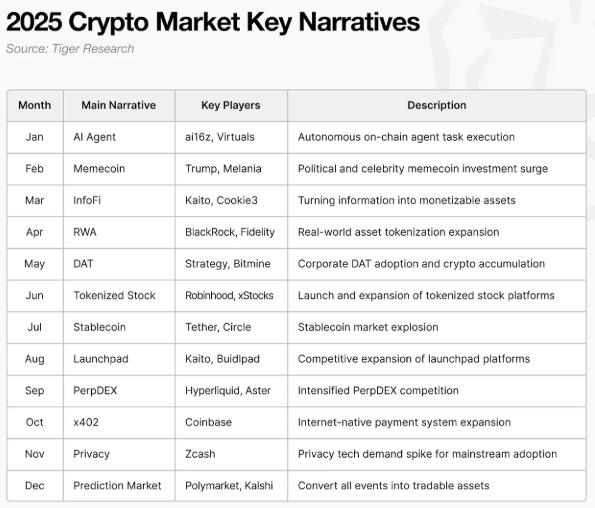
Finds Tiger Search That the year 2025 was defined by rapid narrative cycles generated interest faster than validation, leading to widespread fatigue and skepticism. Most of the narratives faded quickly, but a subset of them translated into real use cases that pushed the market forward, particularly where retail access was simple and intuitive. Memecoins showed how quickly users could join, but also how fragile the interaction was without retention. Experiments like InfoFi have highlighted incentive-based growth but have exposed issues with quality and trust. The most visible progress came when cryptocurrencies demonstrated product-market fit, including stablecoins, prediction markets and payment bars, demonstrating that lasting value only emerges when narratives align with real utility.
Get news in your inbox. Explore Blockworks newsletters: