
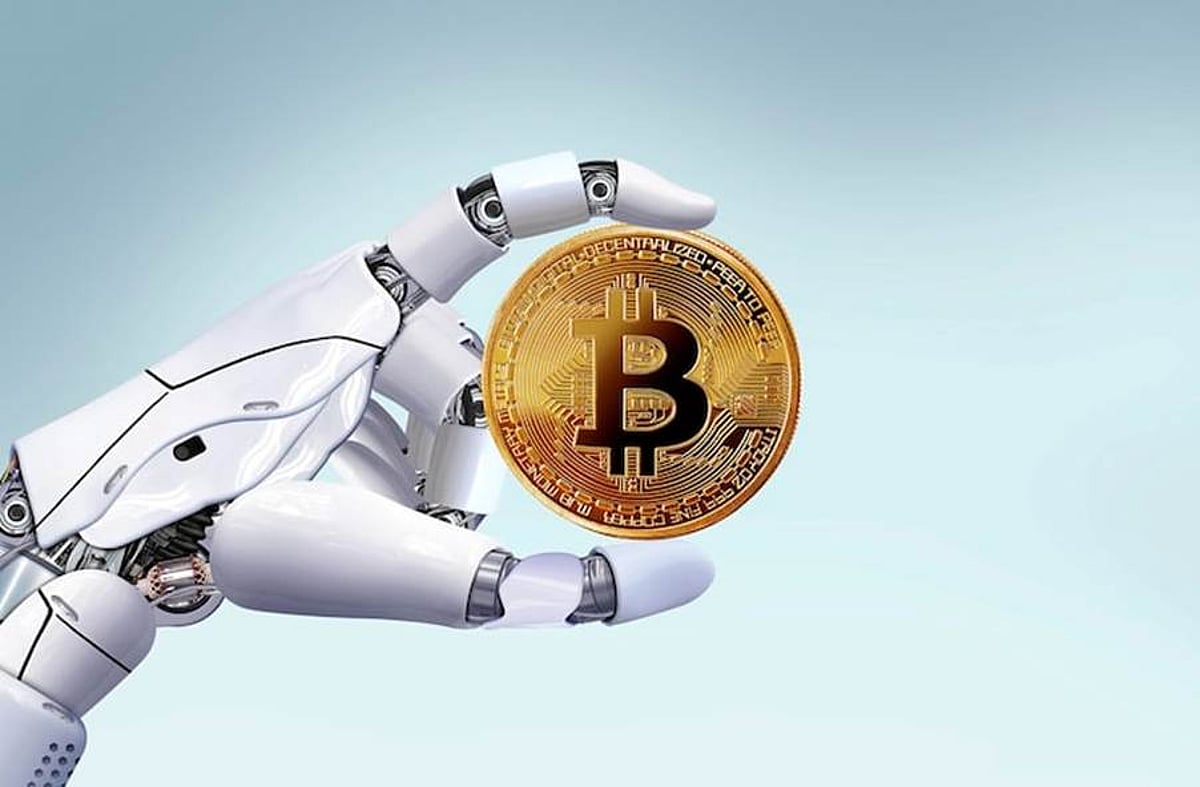
AI is always a purely digital achievement, a series of models, algorithms and data streams that operate secretly in the cloud. However, there is always a truth hiding behind every AI system. AI needs hardware. It uses graphics processing units to run models, storage solutions to store large data sets, data communications networks to transfer data, sensors to capture real-world signals, and the power to operate these components.
As AI becomes more sophisticated, hardware dependency is now one of the biggest bottlenecks in innovation. Although centralized cloud infrastructure is very powerful, it is expensive, physically distributed in limited regions of the world, and dominated by a few companies. These factors will soon conflict with the requirements of future AI systems.
This is where DePINs, or Decentralized Physical Infrastructure Networks, become so important. DePIN represents the first decentralized, blockchain-regulated way to develop and manage real-world infrastructure. This allows DePIN to provide the hardware platform needed for next-generation AI systems that will decentralize, scale, and evolve, especially in the changing AI landscape toward decentralized and modular architecture.
What is DePIN and why is it important for AI?
DePIN represents a blockchain-based network that coordinates the deployment, operation, and maintenance of physical infrastructure through decentralized incentives. Instead of relying on single-point ownership and management of devices by central entities, DePIN enables individual contributors and organizations to provision resources directly into a shared network.
Basic components of DePIN
-
Compute resources: GPUs, CPUs, and edge devices
-
Data storage infrastructure
-
Wireless devices and networks
-
Sensor networks and Internet of Things devices
-
Energy and energy-related infrastructure
Smart contracts handle verification, coordination and reward, so participants are rewarded based on performance rather than trust in the intermediary.
This AI paradigm is fundamentally changing the way infrastructure is accessed and scaled.
The Next Generation AI Infrastructure Challenge
Modern AI workloads are not tied to any central data centers or fixed workloads. Several transformations are changing infrastructure requirements:
-
AI models are larger and more compute-intensive
-
AI reasoning is getting closer to users and devices
-
Real-time processing with low latency is needed to make decisions in this case.
-
AI applications are becoming more autonomous and persistent
-
Modular AI systems require flexibility and composability in infrastructure.
Central infrastructure cannot keep up with these requirements efficiently. DePIN distributes infrastructure ownership and operation over a global network.
DePIN’s role in providing hardware support for next generation AI
1. Decentralized computing for artificial intelligence training and inference
Computation is the core of artificial intelligence. The processing power needed to train and run these models is significant, and has traditionally been provided by cloud providers.
DePIN-based computing networks enable:
-
Participants and data centers willing to contribute unused or allocated GPUs
-
Various AI tasks are performed by multiple independent nodes
-
Future prices will be determined by market forces
This is because the decentralized computation layer will allow AI developers to access computation resources around the world.
2. Advanced infrastructure for real-time AI applications
Many next-generation AI applications, including self-driving cars, smart cities, robotics, and industrial automation, require split-second decision-making. With all data being sent to central clouds, there are latency and reliability issues.
DePIN makes the following possible at the edge:
-
Coordinating distributed nodes in close proximity to data sources
-
This allows AI reasoning to be done locally
-
Bandwidth costs and latency reductions
This is for modular AI technology, which includes different functional modules that operate separately on different hardware setups.
3. Decentralized storage of artificial intelligence data and models
AI systems are drowning in massive data, from large training datasets to checkpoint models. DePIN-based storage networks provide decentralized alternatives to traditional cloud storage.
Key advantages include:
-
Redundancy and fault tolerance
-
The risk of data monopoly is reduced
-
Availability of verifiable data
-
Better compatibility with open AI ecosystems
Decentralized storage makes AI data pipelines flexible and accessible even as systems scale globally.
4. Expand devices with incentives
But what makes DePIN so powerful is its economic model. It incentivizes participants to provide reliable infrastructure services by rewarding them with tokens.
Thus, a feedback loop of sorts is created:
-
The increasing demand for artificial intelligence increases network usage
-
Higher usage provides higher rewards
-
More hardware providers are attracted to increased rewards.
-
Infrastructure capacity develops organically
Unlike centralized infrastructures, DePIN does not rely solely on large initial investments, thus making expansions of AI infrastructure more adaptable and decentralized.
How DePIN Infrastructure Supports AI Workloads (Step by Step)
-
Hardware providers deploy physical hardware
-
The devices communicate with the DePIN protocol
-
Smart contracts verify performance and uptime
-
AI applications require compute, storage, or bandwidth
-
Providers are compensated based on usage and reliability
This transparent process ensures coordination while reducing trust between AI applications and physical infrastructure.