
- In 2025, the DePIN sector generated $72 million in onchain revenue, according to one report.
- Analysts have named three viable models for network scaling – InfraFi, capital-light infrastructure, and bull market timing.
- Of DePIN’s four sectors, computing has proven to be the most competitive.
According to the analytics platform’s State of DePIN 2025 report Facilitatorthe DePIN (Decentralized Physical Infrastructure Networks) sector reached nearly $10 billion in traded market cap in 2025 and generated about $72 million in onchain revenue.
Leading networks’ multiples are now between 10 and 25 times revenue, a sharp contrast to more than 1,000 times during the 2021 cycle.
Among the top DePIN projects with real usage, revenues are starting to decouple from the token’s price movement. Despite an overall decline in prices across the sector last year, some networks continued to grow their revenues driven by facilities rather than speculation.
Analysts point out that investors often rely on an outdated view of the sector. Whereas in 2021 DePIN projects were demand-constrained, had unsustainable profitability (high inflation), and were “incredibly overvalued (more than 1,000 times),” in 2025 they are already revenue-generating, supply-constrained, consistently profitable, with minimal or no supply growth, and have “growth driven by facilities and efficiencies, not subsidies.”
However, the report emphasizes that many founders are still “playing by the rules of the last cycle,” while only market leaders have miners who earn from paid usage, revenues that benefit crypto holders or stakeholders, monthly growth in customer spending (net retention), and access to cheap financing for infrastructure deployment.
The report highlights three viable models for scaling DePIN’s global reach:
- InfraFi – Financing physical infrastructure with capital seeking stable returns for cryptocurrencies. With over $175 billion worth of stablecoins in circulation, this model is seen as a new path, albeit one that involves credit, regulatory and timing risks.
- Light capital infrastructure – projects with relatively low capital expenditure and rapid monetization
- Bull Market Timing – Launching a token during periods of excess liquidity
In 2025, DePIN startups raised a record $1 billion in private capital, mostly at seed stage and Series A rounds, indicating long-term confidence from private investors even at weak public token valuations.
The research also claims that DePIN revenue growth has proven to be more resilient in bear markets than the growth of DeFi and L1 networks.
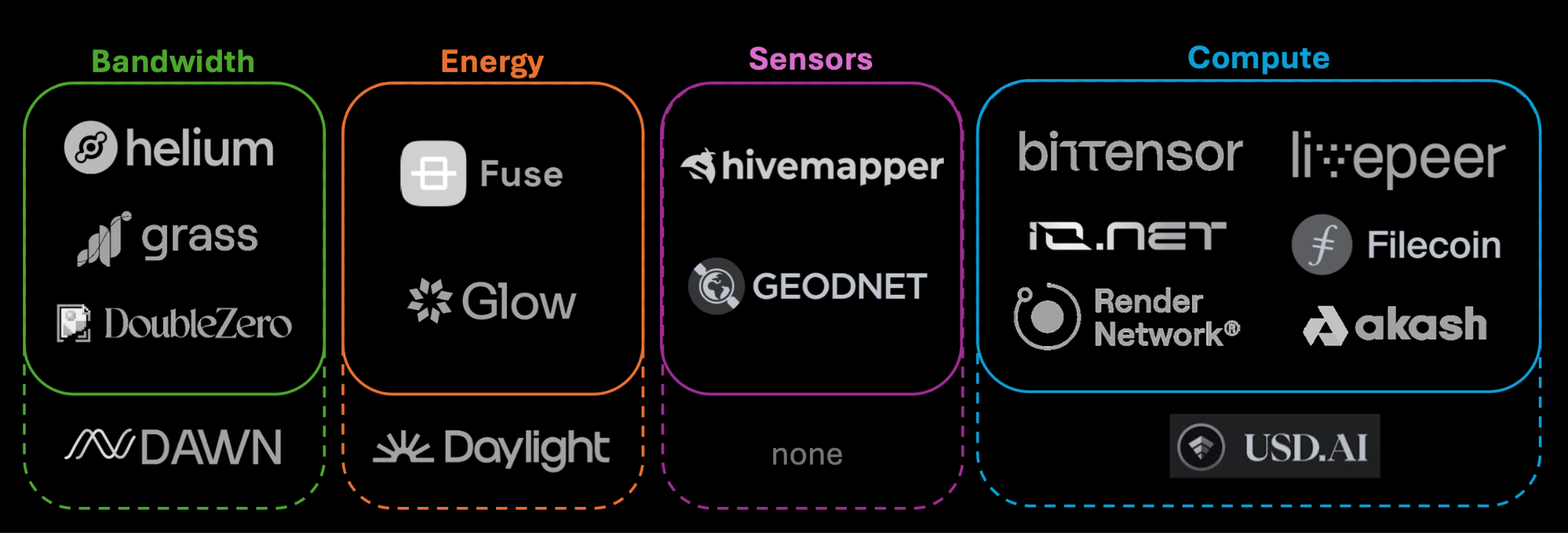
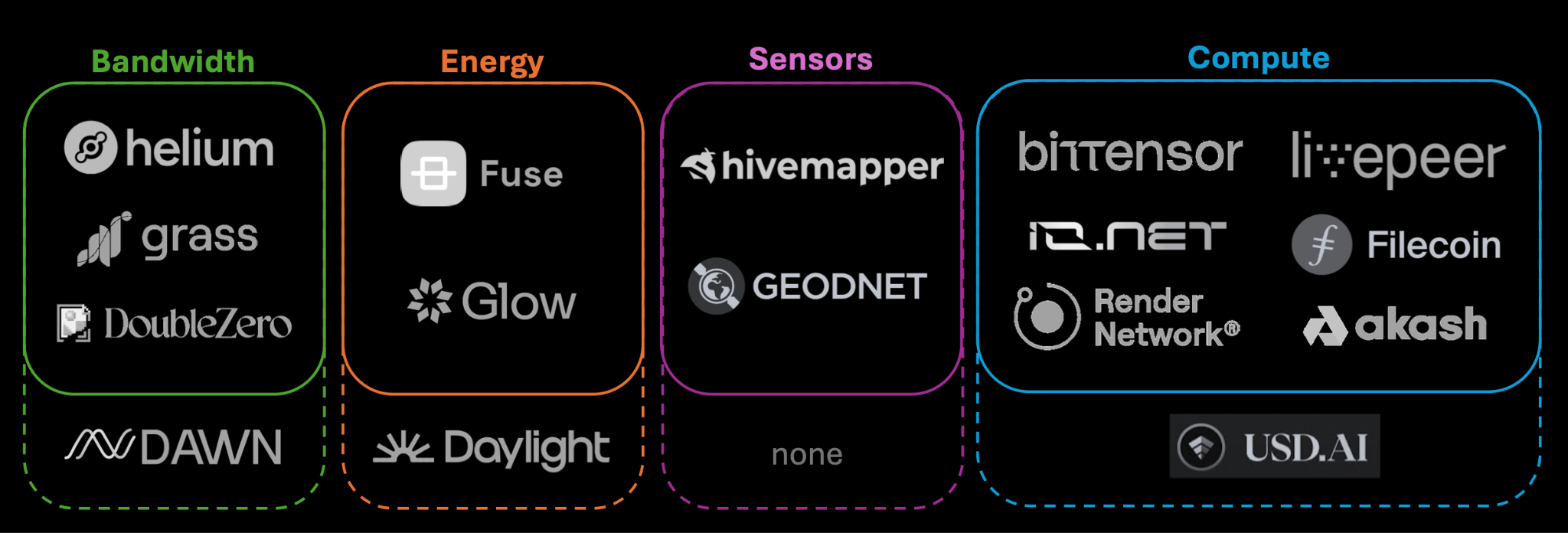
Competition across sectors looks like this:
- Bandwidth – Probably has the strongest advantages, but global expansion is difficult
- Energy DePIN – The most capital intensive, but often with high margins
- Sensor networks – less capital intensive, but have difficulty generating income
- Computing – the most competitive sector, with over 50 projects and weak differentiation
As a reminder, Andreessen Horowitz’s crypto arm (a16z) highlighted that DePIN can pool unused computing resources — from gaming PCs to data centers — creating open computing markets for training and inference of AI models.