
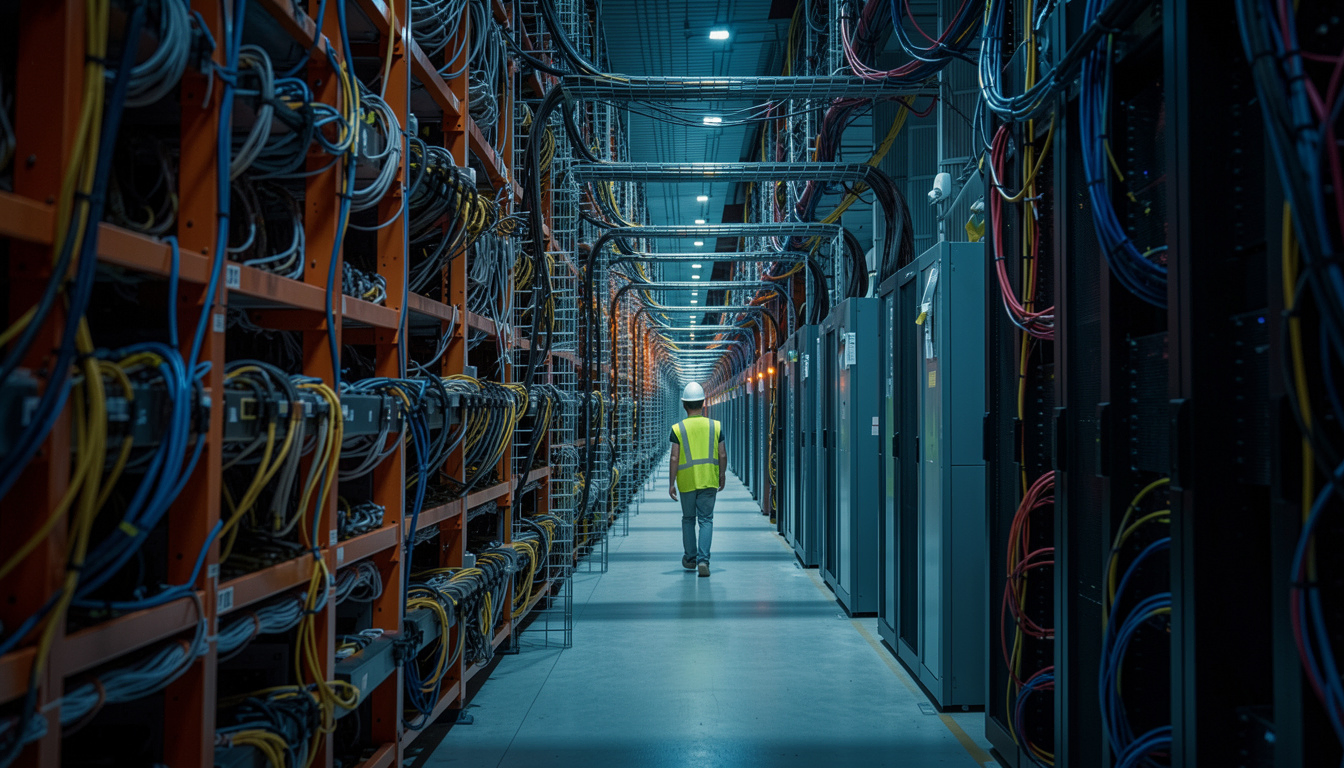
Goldman Sachs said a baseline forecast for AI infrastructure spending could reach $7.6 trillion, although the final cost will depend largely on factors including how quickly AI chips age and whether older hardware can be reused for simpler inference tasks.
Shortages of power infrastructure, skilled labor and electrical equipment could also slow the expansion of AI data centers as companies race to build the computing power required for large-scale AI systems, the report said.
Decentralized physical infrastructure networks can provide significant cost savings over hyperscalers like Amazon Web Services but remain disadvantaged in low-latency workloads because globally distributed GPUs cannot match the microsecond-level speeds of centralized data centers, said Vadim Taszycki, head of growth at StealthEX.
Tasecki said decentralized networks may still compete effectively in batch processing and AI fine-tuning tasks where speed is less important, though latency limitations make them unsuitable for real-time chatbot applications that require near-instantaneous responses.
Verifiability rather than raw performance will ultimately determine whether decentralized AI infrastructure gains long-term traction in enterprise and financial applications, said Liu Fan, founder of Cysic.
“The hard problem is not distributed computing, but discovery, scheduling, and authentication. The wedge is not the price per token; it is verifiability.”
said the fan.
Industry participants also highlighted growing interest in onchain credit markets as a financing mechanism for AI infrastructure, with platforms like Maple and Centrifuge potentially enabling smaller syndicated loans for AI infrastructure that are often overlooked by large private credit companies.