Twitter isn’t known for being an accurate representation of the world, but it gives us a good idea of what people are thinking.
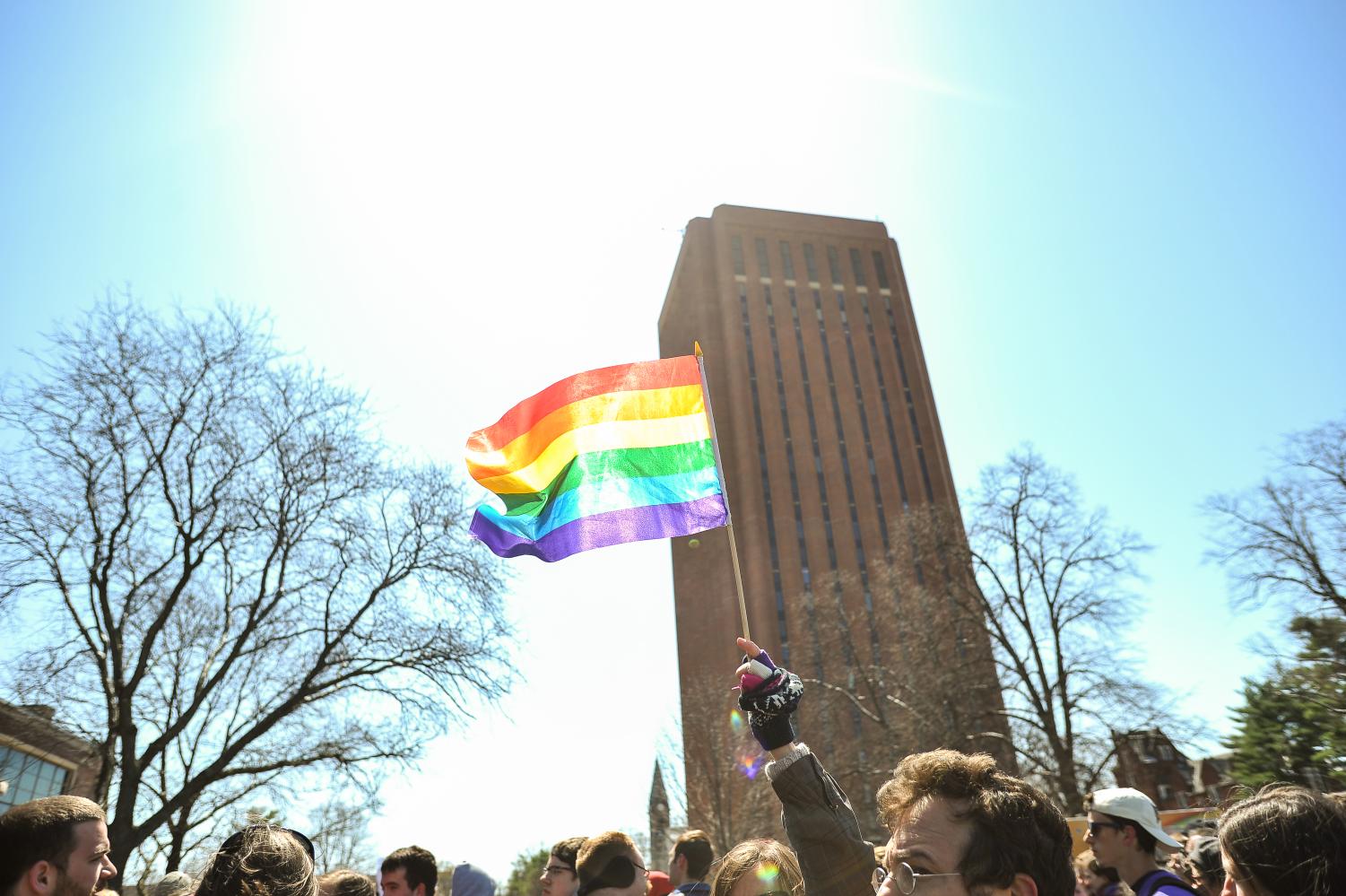
On June 1, 2022, the New England Patriots chirp A photo of the jumbotron at Gillette Stadium displaying the colors of the Pride flag. As I read the responses, some were showing support, but the overwhelming majority were some of the most heartbreaking responses I have ever read.
“Yes! Why don’t you raise the American flag high and feel proud that way?”
“Is there a national straight and narrow month?”
“It’s not hate, it’s just biology and nature.”
And a simple word: “Give me a break.”
As the world moves towards growth and adaptation, sport seems stuck in a time where old gender roles are expected, where men are seen as masculine beings, women must act feminine, and anything outside of this strict and exclusive framework is considered incorrect. Why does sport lag so far behind the rest of the world when it comes to accepting people from the LGBTQ+ community as valid members of society? Why is toxic masculinity and heteronormative stereotypes so deeply embedded in sports culture? The short answer: no answer.
The longer answer is that many LGBTQ+ youth are afraid to participate in sports because of the fear they feel of being “different.” In 2017, The Trevor Project found that less than a third of LGBTQ+ youth participate in sports of any kind. Those from the LGBTQ+ community who participate in sports often hide their identity and act homophobic to try to convince those around them that they are one of the same. It’s not that LGBTQ+ youth don’t like sports, it’s that they’re afraid to come out as themselves, or afraid of what they might hear if they participate. Hiding your identity is torture, and closeted athletes go through it every day, especially if they feel pressured to use homophobic slurs in order to “convince” their teammates that they are like them.
There are those who claim that they are not homophobic, but they do not like the politicization of sports. Human rights are not political. Public morals are not political. Hating someone because of something they can’t control is not political. It’s just cruel. Most of those who claim to hate the politicization of sports seem to have no problem with the national anthem or military aviation, but displaying a flag of different colors on it crosses the line somehow.
For many people who believe that sports have “become too political,” the last vestiges of pure athletic competition are college sports. For them, this is a level of sport that avoids the influence of money and the influence of “wokeness.” What these “fans” don’t realize is that LGBTQ+ athletes often don’t come out until after they retire, let alone are in college. These athletes are still in college, still struggling, and having to deal with the homophobic rhetoric that is all around us.
Homophobia is not only prevalent among sports fans, it is also incredibly prevalent in locker rooms. Mets outfielder Mark Canha He said He was “in the minority in the club” who believed in LGBTQ+ rights. Athletes willing to publicly support the LGBTQ+ community have always been few and far between. Ken Griffey Jr. was ahead of his time when it came to men supporting LGBTQ+ athletes. In 2003, when he was pressed if he would play with his gay teammate, Griffey He said “Hey, my best friend is gay. I wouldn’t care at all if I had a gay teammate. It wouldn’t bother me, I wouldn’t care.”
Athletes like Griffey and Kanha are rare in the world of men’s professional sports. But homophobia in sports starts much earlier than at the professional level.
From personal experience, the idea of extreme masculinity and heteronormativity begins as early as middle school or late elementary school. Hearing the homophobic slurs and the careless way in which they were used was almost worse than hearing them in an abusive and aggressive way. It’s even worse to hear it as part of everyday conversation because of how normalized it is in the minds of these 13-year-olds. It was so normal that the coach had to sit everyone down and tell them that they were saying that too much and should stop. Of course, that didn’t happen.
Contrast this with the relative lack of homophobia we see in women’s sports, such as the WNBA, the USWNT in soccer, and women’s college athletics. In the WNBA, many athletes are proud members of the LGBTQ+ community, and with the USWNT, Megan Rapinoe, a gay woman, was arguably the most influential player on the USWNT’s 2019 World Cup-winning run. This visibility at the highest level of competition can help inspire the next generation.
Even with the relative lack of homophobia compared to male sports, it does not mean that there is no homophobia in women’s sports. When Rapinoe won the 2019 FIFA Women’s Player of the Year award, she used it Acceptance letter To publicly denounce the homophobia she and other footballers experience on the pitch. However, it seems that when it comes to women’s sports, athletes and coaches respect each other and respect the work they have put in to reach their level of success. Why, relatively speaking, do men’s sports lag behind women’s sports so far?
It doesn’t have to come from teammates or opposing athletes either. Adults are sometimes the biggest supporters of homophobia in sports, no matter the sport. The first time I heard gay people being used negatively was in 2014 when I went on a snowboarding trip but discovered I was better at skiing. When everyone got back to the hostel, one of the adults on the trip proceeded to lift my skates off the wall, pretend to put them on, and shouted “I’m gay! I’m gay!” in a sarcastic voice, pretending to go down the slopes. Laughter ensued. I was more confused than anything else. I got mildly teased for skiing instead of snowboarding, but this was something else. “What made him choose that word?” My 11 year old head thought.
For most of the year, the contributions and struggles of LGBTQ+ athletes, members of the sports media, or anyone involved in sports are largely ignored. Some of the people mentioned above in this article would strongly disagree with this statement, believing that members of the LGBTQ+ community are in the spotlight too much throughout the year. But the truth is, these people are the reason why advocacy for the LGBTQ+ community needs to take place after Pride Month. There will always be people who hate based on one characteristic of a person, in this case it is sexual orientation. If there are always those to hate, there must always be those to fight for. Who you choose to love should not be the deciding factor when deciding whether or not you love someone. But since that’s the case, we need to continue to advocate for the LGBTQ+ community, this Pride month and beyond.
It is very important not to do this.
Johnny Deppen can be reached at [email protected] And follow him on Twitter @Jdepin101.