
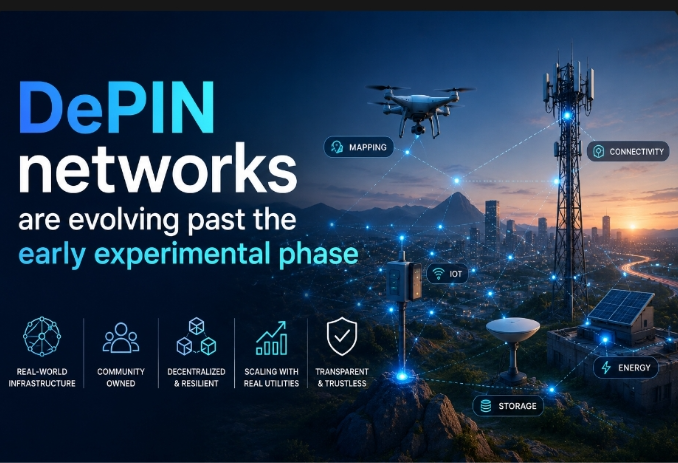
Many early projects shipped tokens before meaningful coverage was shipped, and the resulting reward dynamics often looked more like emissions farming than infrastructure building. Two years later, the category has matured considerably, and the projects that have survived operate at scales that make the original thesis seem defensible anyway.
The leaders in this category – Helium, Hivemapper, io.net, Geodnet, DIMO, and many others – have moved beyond speculation to operating true distributed infrastructure with measurable benefit. Helium’s mobile network now serves cellular coverage of more than 600,000 active subscribers. Hivemapper has mapped more than 30% of the world’s roads through its network of stakeholders equipped with its dashcams. io.net coordinates computing capacity across thousands of independent GPU operators. These are operational metrics, not symbolic metrics, so the difference is important.
The infrastructure supporting these networks had to develop in parallel. DePIN backends generate distinct on-chain activity patterns – high-volume, high-frequency hardware certificates from large fleets of independent contributors, with reward distributions that need to be settled reliably even during periods of network congestion. Most DePIN teams working at scale have moved from commodity RPC endpoints to specialized infrastructure exposed through a dedicated network Solana blockchain APIBecause the workload patterns simply don’t work on infrastructure designed for typical decentralized application traffic.
Why did Solana end up dominating this category?
DePIN Networks ran into the problem of chain selection early on. Their economics require cheap transactions (devices report data frequently, sometimes hourly), fast finality (rewards must be settled predictably), and high throughput (tens of thousands of devices generating certificates generate a constant load that would saturate slower chains). Many early DePIN projects launched on Ethereum found the transaction cost prohibitive, and were migrated.
It turns out that the combination of low fees and high throughput that Solana used matched the economics of DePIN almost perfectly. A device that sends a certificate every hour costs a cent per year on Solana. The same workload would cost thousands of dollars per device per year on the Ethereum mainnet. This gap is large enough that the choice of chain is essentially predetermined for any large-scale DePIN project.
Networks that have gone beyond proof of concept
Several DePIN classes have shown real benefit on a large scale:
- Wireless (Helium Mobile, Helium IoT) – Provides actual cellular and IoT coverage to paying subscribers, not just token rewards
- Mapping and Geospatial (Hivemapper, Geodnet) – Create commercial grade maps and geospatial data that are sold to logistics and automotive clients
- Compute and AI (io.net and Render) – Coordinating GPU and CPU capacity for AI training, inference, and rendering workloads
- Energy and Grid (Daylight, ReGrid) – Coordinating distributed energy resources and grid services in selected regulated markets
- Data Mobility (DIMO, Helium Connected Vehicles) – Vehicle telemetry networks with insurance and fleet management as primary buyers
Shift from token first to revenue first
The most significant change in the DePIN category over the past two years is the shift from a token-based economy to a revenue-based economy. Early DePIN projects funded contributor rewards almost entirely through token issuance, creating questions about sustainability. The successful current generation has built real customer revenues that support rewards, with token emissions acting as supplementary capital rather than the primary source.
Helium Mobile is the clearest example. The network runs on cellular subscriber revenues, not nominal emissions. Hivemapper sells map data to enterprise customers and uses that revenue to fund shareholder bonuses. io.net charges customers and distributes revenue to GPU providers. This model is more sustainable because shareholder compensation is tied to actual demand and not what the protocol is capable of releasing.
It requires infrastructure on this scale
Running a DePIN network with hundreds of thousands of active devices generates load on the infrastructure that resembles industrial telemetry systems more than typical DeFi activity. Three distinct workload patterns dominate:
- High-volume static writes – Devices send certificates, location updates, or proofs of service at regular intervals across the entire fleet
- Intermittent Bonus Accounts – Periodic bonus distributions create a concentrated transaction load when bonus periods are settled
- Continuous Indexing – Back-end systems need to maintain real-time views of fleet activity, coverage maps, and stakeholder performance
Commodity RPC infrastructure handles Pattern 1 poorly under stress, Pattern 2 poorly during periods of settlement, and Pattern 3 poorly in general. Production DePIN backends always run on dedicated infrastructure tuned to these workload characteristics.
Where does the category go next?
The trajectory of DePIN networks leading indicates that this category will continue to expand to include more capital-intensive types of infrastructure. Early networking targeted use cases where the hardware cost per stakeholder was low—wireless hotspots, information cameras, and graphics processing hardware. The next generation is moving into industrial categories: distributed energy resources, industrial-scale environmental monitoring, and logistics tracking infrastructure.
These categories require larger shareholder investments and longer payback periods, but they also have larger addressable markets and more sustainable customer relationships. The proven DePIN model for consumer-level contributed devices is now being tested in industrial contexts where the economics are different but potentially more attractive.
What seemed like an experimental cryptocurrency category in 2023 has matured into something more substantive. The networks that survived the cycle are running real infrastructure with paying customers, and the model is starting to look solid in a way that the early hype cycle couldn’t capture. This is an important shift, and one that the broader infrastructure industry is starting to take seriously.