Key insights
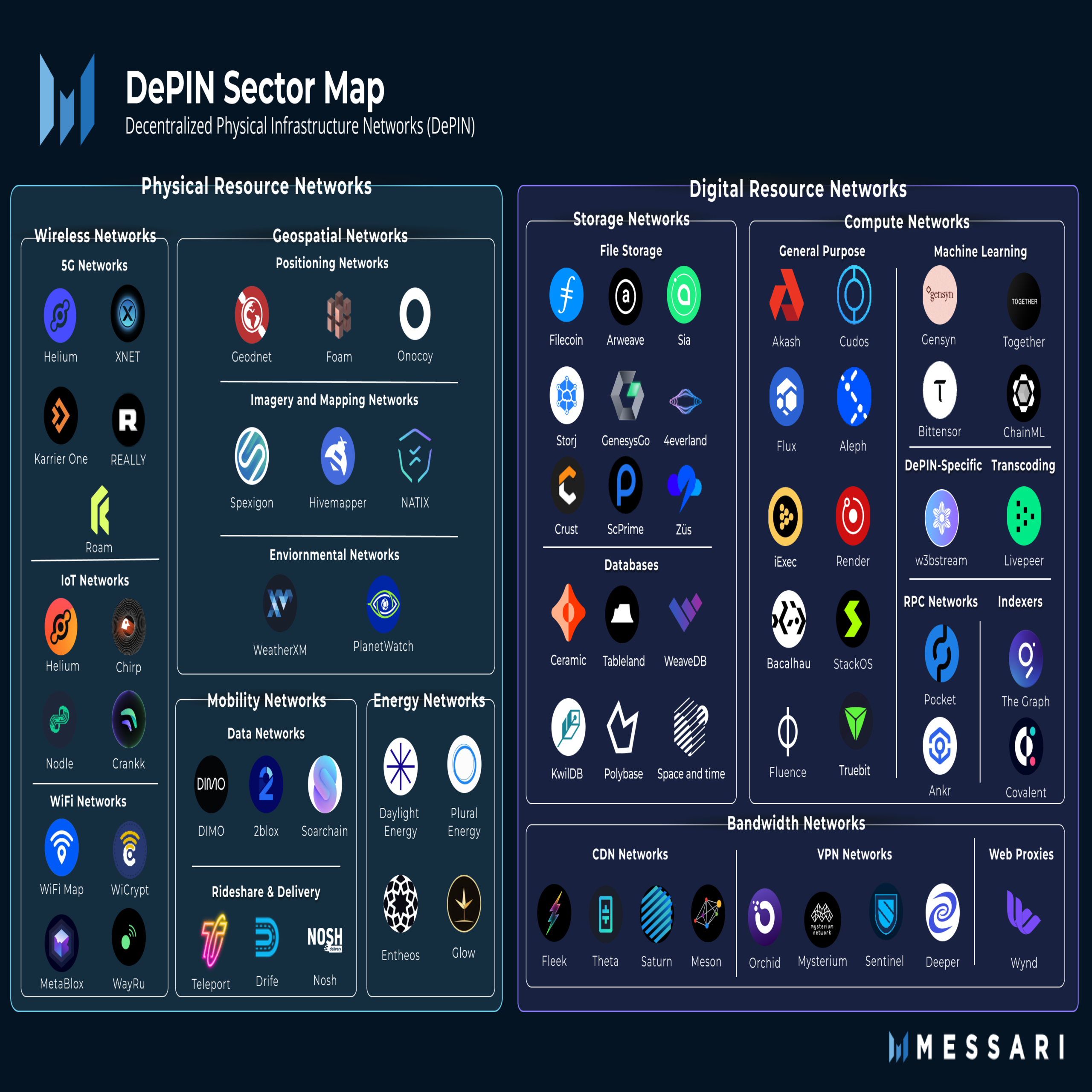
- Decentralized Physical Infrastructure Networks (DePINs) Use token rewards to incentivize crowdsourcing and building real-world physical infrastructure networkswith two main sub-sectors: physical resource networks and digital resource networks.
- Networks of material resources motivate participants to mentor or disseminate Location-based devices to deliver real, non-fungible goods and servicesSuch as energy, geospatial and communication.
- Digital resource networks incentivize participants to mentor or publish Hardware to provide replaceable digital resources, such as computing, storage, and bandwidth.
- The DePIN model provides a A new approach to capital formation It opens up new possibilities for human coordination.
- While DePIN Networks has succeeded in expanding the supply reach of networks, The demand side has been challenged by a lack of easy-to-use tools and interfaces That simplifies the use of the network.
Symbolic incentives have proven to be a powerful tool in aligning individuals around a distributed but common goal. As cryptocurrencies mature, token alignment models are increasingly refined as they spread into more real-world industries ripe for disruption.